

Supreme Court of the United States, Why It Matters and How It Works
A court with only nine justices can shape how millions of Americans live. The Supreme Court of the United States is the highest court in the country, and its rulings can affect speech, voting, privacy, guns, religion, schools, health care, and presidential power.
Even if you never follow legal news, the Court still touches daily life. It can settle major disputes, limit government action, and decide what the Constitution allows. To understand its influence, it helps to start with the basics.
What the Supreme Court is and how it fits into the federal government
The Supreme Court sits at the top of the judicial branch, one of the three branches of the federal government. Congress makes laws. The president enforces them. The courts decide what those laws mean and whether they fit the Constitution. That balance helps keep any one branch from holding too much power.
In plain terms, the Court's main job is to interpret the Constitution and federal law. It does not pass laws, and it does not run elections or schools. Still, its decisions can change how those systems operate. The Court's own About the Court page and the federal judiciary's guide to court role and structure both show how this check on power works.
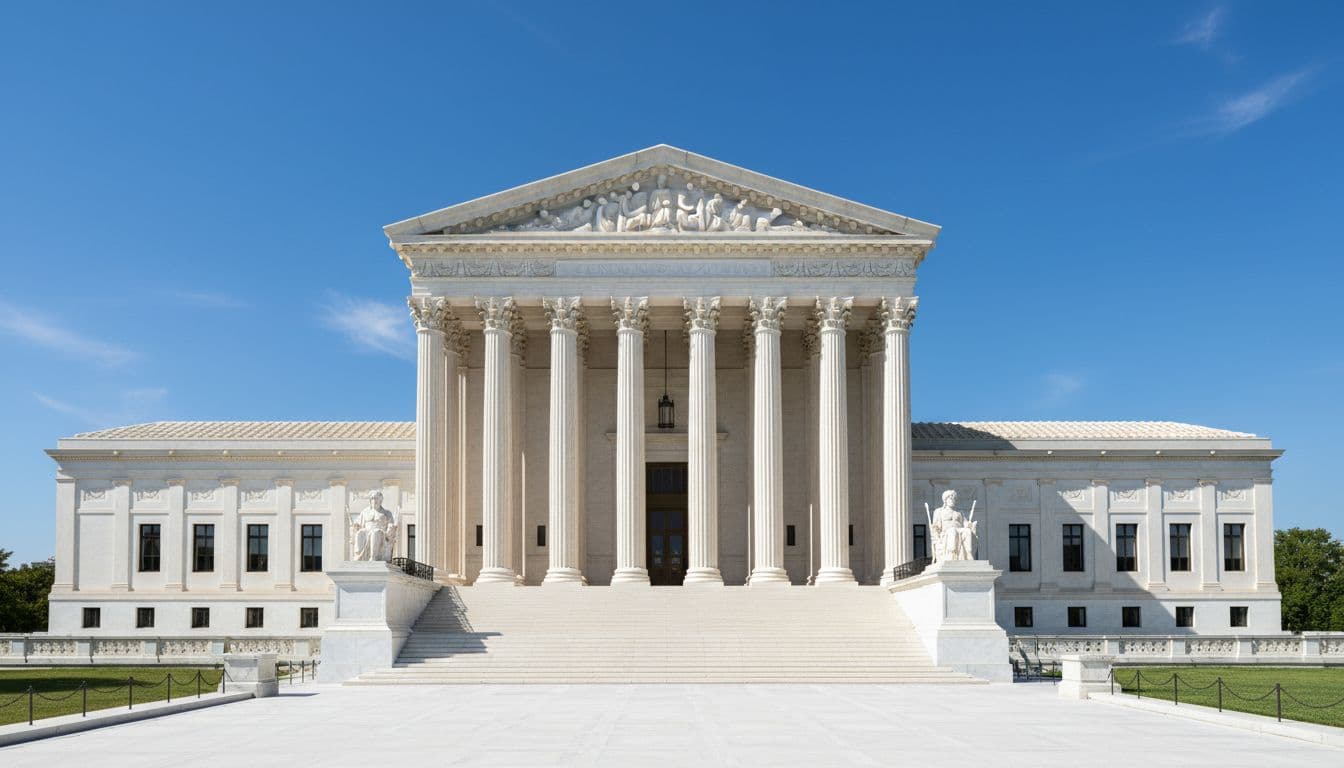
Why the Court is called the highest court in the land
Lower courts handle most legal fights. Trial courts hear evidence and testimony first. Appeals courts then review whether the law was applied correctly. The Supreme Court stands above both.
That's why it is called the highest court in the land. On questions of federal law and the Constitution, it has the final word. If the Court decides an issue, lower courts must follow that ruling. Still, most cases never get there. The legal system is like a pyramid, broad at the bottom and narrow at the top.
How many justices serve, and how they get the job
The Court has nine justices, one chief justice and eight associate justices. A president nominates a justice, and the Senate votes on whether to confirm that person.
Once confirmed, justices serve during "good behavior," which usually means for life. That long tenure matters because one appointment can shape the law for decades. If you want a plain-language overview of the process, the federal courts' judge appointment FAQ is a useful reference.
How a case gets to the Supreme Court and what the justices do
The Court hears only a small slice of the cases people ask it to review. That makes getting in a bit like passing through a narrow gate. Most requests are turned away, even when the losing side strongly believes the lower court got it wrong.
From lower courts to a petition for review
A case usually starts in a trial court, either federal or state. After a decision, the losing side may appeal to a higher court. If the issue involves federal law or the Constitution, the case may eventually be presented to the Supreme Court.
At that stage, the party seeking review files a petition for certiorari. That phrase sounds formal, but the idea is simple. It is a request asking the Court to take the case. The justices are not required to say yes. In fact, they usually say no. For a clear breakdown, SCOTUSblog explains the certiorari process, and Cornell's Legal Information Institute defines a writ of certiorari in plain terms.
Cases with broad legal importance have a better chance. So do cases where lower courts disagree. If one appeals court reads a federal law one way and another reads it differently, the Supreme Court may step in to settle the conflict.
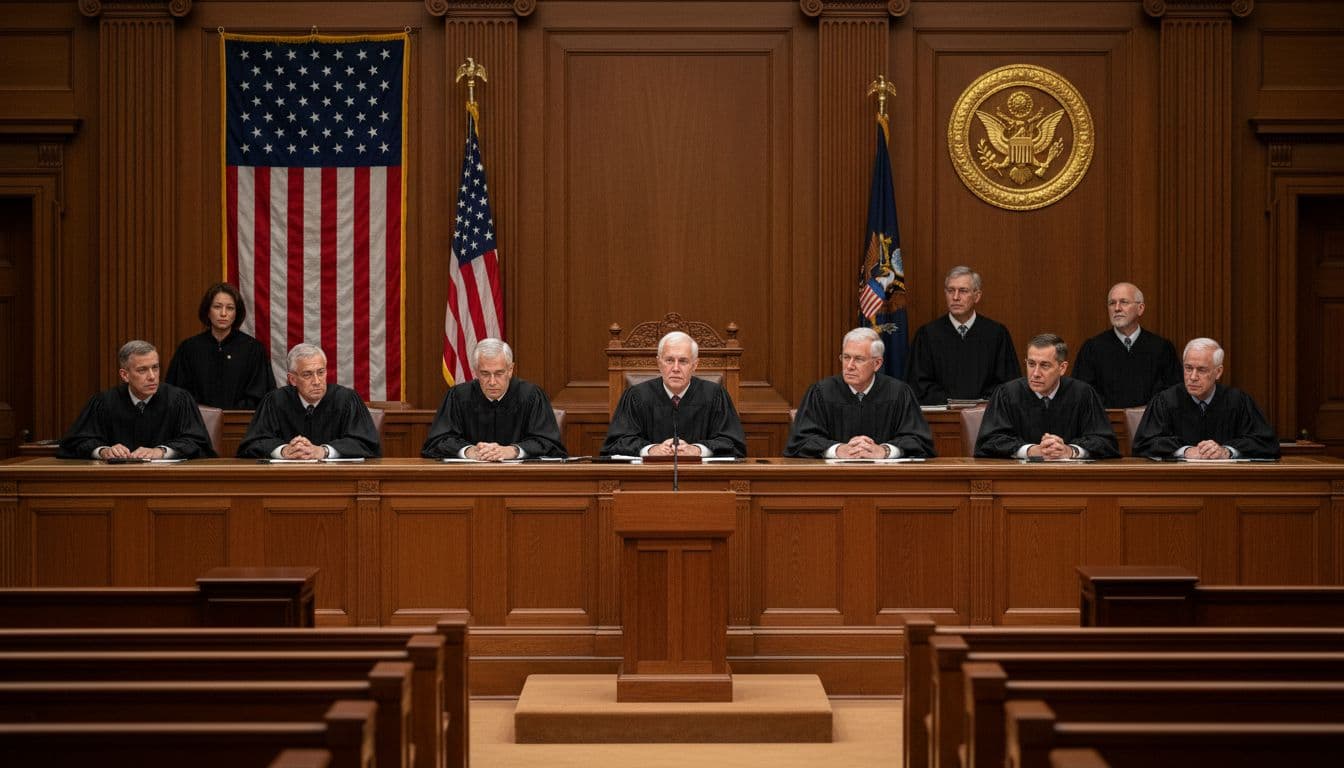
What the rule of four, oral arguments, and written opinions mean
The rule of four means at least four justices must vote to hear a case. If fewer than four agree, the petition is denied, and the lower court ruling stays in place.
When the Court accepts a case, both sides file written briefs. Outside groups sometimes file briefs too, hoping to influence the justices. Then come oral arguments, where lawyers answer tough questions from the bench.
The justices do more than listen, they test how far each side's argument can go.
After arguments, the justices meet in private conference and vote. One justice writes the majority opinion if there is a majority. That opinion becomes the Court's ruling. A justice who agrees with the result, but for different reasons, may write a concurring opinion. A justice who disagrees may write a dissent. Those separate opinions do not control the outcome, but they can shape future debates.
Why Supreme Court decisions shape American life and public debate
A Supreme Court ruling is not like an ordinary headline that fades in a week. It can reset the legal rules for the whole country. That's why the Court often sits at the center of national arguments.
Rights and freedoms the Court often decides
The Court often rules on free speech, equal protection, religious liberty, gun rights, abortion, voting rules, and executive power. Some cases ask what the government may forbid. Others ask what rights the government must protect.
Those decisions can affect classrooms, workplaces, hospitals, election systems, and police practices. They can also change what federal agencies may do, or how far a president can go without Congress. If you want a broader sense of how major rulings have shaped public life, the Brennan Center's overview of landmark Supreme Court cases offers helpful context.
Why the Court draws praise, criticism, and close attention
People often praise the Court when it protects rights they support. They criticize it when rulings cut the other way. That pattern is old, but the attention is sharper now because the stakes feel so high.
Some people favor originalism, which looks closely at the Constitution's original public meaning. Others support a living Constitution approach, which gives more weight to modern conditions. At the same time, debates over public trust, ethics, and the role of judges keep growing. That is also why confirmation fights can be so intense. A single seat can shift the Court's direction for years.
The Supreme Court is small, but its reach is huge. When it speaks on constitutional questions, the effects can last across elections, presidencies, and generations.
Paying attention to what cases the Court agrees to hear is often as important as watching the final rulings. If you want to understand where American law may be headed next, start there, because the Supreme Court often tells that story before the rest of the country catches up.





0 Comments